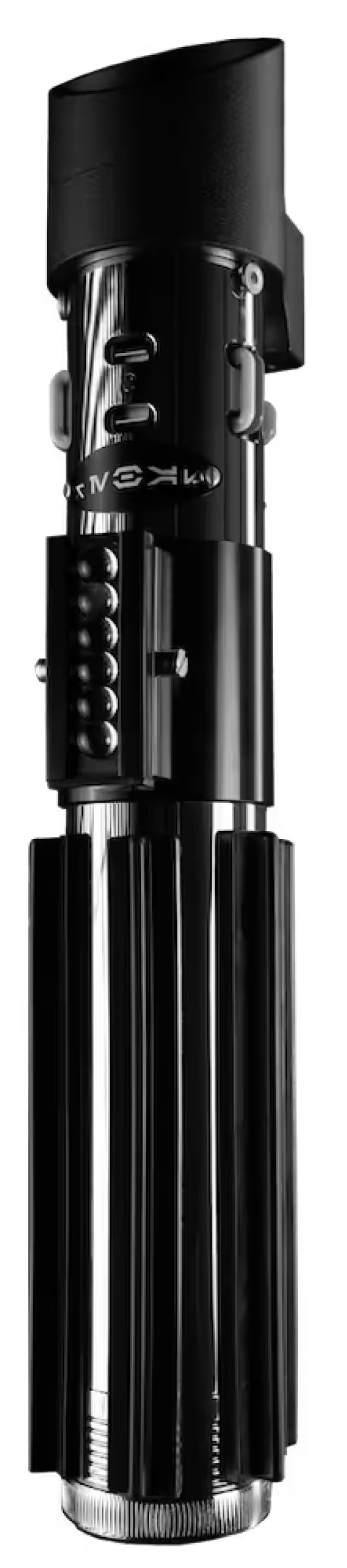
In the right hands—and the right environment—a double-bladed saber (staff saber) can be extremely practical, but it demands specialized training and situational awareness.
Key Advantages
Extended reach and continuous offense
With a blade at each end, you can strike high and low in a single rotation, maintain pressure without resetting, and keep opponents at a comfortable distance.
Built-in defense
The spinning momentum of a staff creates a moving shield, making it harder for adversaries to close in.
Versatility on demand
Most modern staff sabers unscrew at the center coupler, giving you the option to fight with two independent blades in tight quarters or switch back to staff mode for wide, sweeping techniques.
Showmanship and intimidation
The weapon’s visual impact alone can disrupt an opponent’s rhythm—useful in choreography, tournaments, or crowd-control roles where presence matters.
Practical Limitations
Spatial requirements
A staff excels in open space; in hallways or densely packed duels, the long profile can become a liability.
Learning curve
Controlling spin velocity and blade alignment takes time. Beginners risk clipping themselves until muscle memory develops.
Weight and fatigue
Although balanced, a dual-blade setup is heavier at the ends than a single hilt, taxing forearms and shoulders during extended sessions.
Structural stress
The central connector bears more torsion than a standard hilt, so cheap builds may loosen over time; high-quality machining and solid couplers are essential.
Bottom line:
A double-bladed saber is highly practical for practitioners who master its momentum and adapt tactics to the environment. For narrow arenas or close-in work, simply separating the staff into two sabers restores agility. If you already handle straight, curved, or crossguard hilts comfortably and want a weapon that delivers both spectacle and strategic reach, a staff saber can be an invaluable—and versatile—addition to your arsenal.